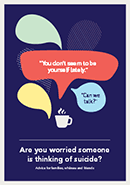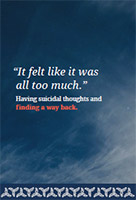
Related websites
Mental Health Commission
An independent monitor and advocate for people with experience of mental distress and/or addiction, and for their families/whānau.
- Interactive map (contact details for mental health services in your area).
New Zealand Guidelines Group
Promotes the use of evidence in the delivery of health and disability services. Has some good resources for consumers.
The Lowdown
Interactive site to help young people understand and deal with depression. (Videos, life stories, music, chat.)
Depression website - The Journal
E-therapy tool, guided by John Kirwan. How to recognise depression, find a way through and stay well. How you can help others. Personal stories, video, tools.
Suicide Prevention Information New Zealand
Helpful resources, including:
HealthEd
A catalogue of free health resources from the Ministry of Health.
- Check the Mental health section for resources that may be relevant for you.
Related websites
Mental Health Commission
An independent monitor and advocate for people with experience of mental distress and/or addiction, and for their families/whānau.
- Interactive map (contact details for mental health services in your area).
New Zealand Guidelines Group
Promotes the use of evidence in the delivery of health and disability services. Has some good resources for consumers.
The Lowdown
Interactive site to help young people understand and deal with depression. (Videos, life stories, music, chat.)
Depression website - The Journal
E-therapy tool, guided by John Kirwan. How to recognise depression, find a way through and stay well. How you can help others. Personal stories, video, tools.
Suicide Prevention Information New Zealand
Helpful resources, including:
HealthEd
A catalogue of free health resources from the Ministry of Health.
- Check the Mental health section for resources that may be relevant for you.
Suicide prevention
If you know someone who is very distressed or may be suicidal, take their thoughts and feelings about suicide very seriously – especially if they’ve been feeling depressed.
- Be willing to listen to them without judgement.
- Encourage them to get help and talk to someone about how they feel.
- If you’re worried about their immediate safety, take action – there’s advice further down this page on what to do.
Where they can get help
Encourage them to talk to:
- a health care professional or general practitioner (GP)
- a member of your local community mental health team (contactable through your local district health board).
Get them to phone a helpline, such as:
- The Depression Helpline (0800 111 757)
- Healthline (0800 611 116)
- Lifeline (0800 543 354)
- Samaritans (0800 726 666)
- Youthline (0800 376 633).
Put them in touch with counselling services, such as:
- a school guidance counsellor
- iwi and other Māori health/counselling services
- lesbian and gay support counselling services
- sexual abuse counselling services
- alcohol and drug services
-
other specialist counselling services, such as:
- bereavement services
- family counsellors
- whānau support services
- refugee support services.
What to do in an emergency
If you’re seriously concerned about someone’s immediate safety, do the following:
- Call 111 or take them to the emergency department ('A&E') at your nearest hospital.
- Phone your nearest hospital, or your district health board’s psychiatric emergency service or mental health crisis assessment team. (Look in the green section at the front of the White Pages. There is also a list of personal help services right at the front of the book).
- Remain with them until support arrives.
- Remove any obvious means of suicide (eg, guns, medication, cars, knives, rope).
Resources

Having Suicidal Thoughts?
Available from the New Zealand Guidelines Group.

Depression: There is a way through it
Available from the New Zealand Guidelines Group.

Feeling Good
Available on HealthEd.

Stressed Out
Available on HealthEd.
Page last updated: 09 May 2012


Twitter
Facebook