Sit less, move more, sleep well - HE2312
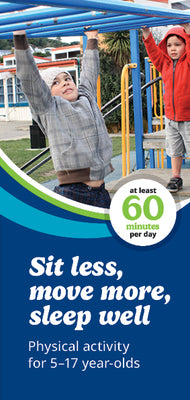
Help your children achieve at least 60 minutes of moderate to vigorous physical activity each day for their health and well-being.
The full resource:
Physical activity for 5-17 year-olds
at least 60 minutes per day
Be active
School-aged children and young people should be regularly physically active, reduce sitting and screen time, and get sufficient sleep for healthy development.
At least one hour of moderate to vigorous physical activity each day will help:
- develop strong muscles, bones and joints
- move with balance and flexibility
- develop and maintain a healthy heart and lungs
- maintain a healthy weight
- build self-confidence and social skills
- control their emotions
- improve academic achievement and behaviour.
The more they move, the greater the benefit.
Physical activity is any movement of the body that uses energy.
Do a variety of activities – including some outdoors
- Moderate activities like swimming, biking on the flat, kapa haka and modern dance will raise the heart rate and get oxygen pumping around the body.
- Vigorous activities such as uphill tramping, mountain biking and most team sports have even greater benefits.
- Be active together. Enjoy the outdoors. Don't forget active transport – walking and cycling to school, shops and hobbies.
- Try new activities. Be supporting and encouraging.
Do activities that strengthen muscles and bones at least three days a week
- Skipping, jumping, and using climbing or park equipment will build muscle and bone strength.
- Bending and stretching will help flexibility.
Look for ways to encourage activity
Look for opportunities to move throughout the day, for example, walking or biking to school, taking the stairs not the escalator. Break up sitting time.
Limit recreational screen time to less than two hours per day – turn off the TV while eating, remove screens from the bedroom.
Try new activities or sports to discover which ones are most enjoyable. Parents can support these interests. Give feedback and praise.
Sleep well
- 9–11 hours of quality uninterrupted sleep for 5–13 year olds
- 8–10 hours of quality uninterrupted sleep for 14–17 year olds
- Consistent bed and wake-up times for all ages.
Be active safely
- Wear appropriate clothing and footwear.
- Wear sunscreen for outdoor activities in summer.
- Have the right safety gear and wear it correctly.
- Know about and practise footpath and road safety.
If you have concerns about health or physical activity, talk to your doctor or nurse.
Join in the action
Do activities as a family. Turn off the TV for active play time. Involve everyone in deciding what to do.
Provide good fuel for action and drink plenty of plain water to stay hydrated.
Related resources
See also the companion pamphlet for adults, Be Active Every Day, HE2311
Read more about healthy eating in Eating for Healthy Children Aged 2–12/Ngā kai tōtika mō te hunga kōhungahunga, HE1302, and Healthy Eating for Young People, HE1230.
You can read and order health resources at HealthEd
Additional information
- Physical activity – Health New Zealand | Te Whatu Ora
- All – Tagged "Exercise and physical activity"– HealthEd
- Sleeping (info.health.nz)
-
Get Active | Play Sport | Sport New Zealand - Ihi Aotearoa (sportnz.org.nz)
- Find a sport or recreation activity | Sport New Zealand - Ihi Aotearoa (sportnz.org.nz)
- Walking School Bus